
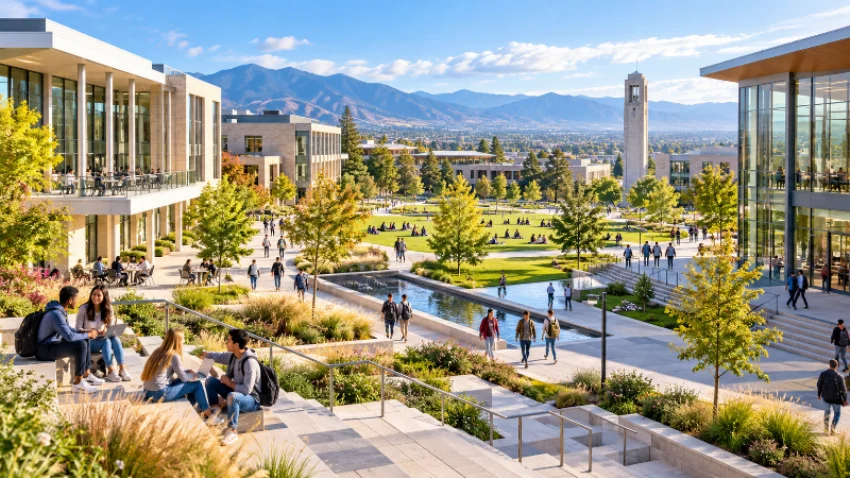
Success at a Public College isn’t simply about earning impressive grades or completing assignments before deadlines. It’s about understanding how to navigate an academic environment filled with opportunities, challenges, and decisions that can influence your future.
From developing effective study systems to building professional relationships, students need practical strategies that extend beyond traditional classroom learning. The most successful learners combine academic discipline with curiosity, financial awareness, and career-focused planning.
This comprehensive guide explores advanced approaches to higher education, helping students maximize available resources, improve their performance, and build a stronger foundation for long-term personal and professional success.
1. Understanding the Foundations of Public College Excellence
Publicly funded colleges and universities serve an important role in making higher education accessible to students from different economic and educational backgrounds.
In the United States, these institutions typically receive financial support from state or local governments, although their funding structures, tuition policies, and academic missions vary.
Some focus heavily on undergraduate teaching, while others operate extensive graduate programs, research laboratories, and professional schools.
Understanding these differences helps students make better academic decisions.
How Public Institutions Create Academic Opportunities
State universities and community colleges often provide access to extensive academic programs, student support services, professional networks, and community partnerships.
However, having these resources available doesn’t automatically translate into educational success.
Students must actively identify which opportunities support their individual goals.
For example, a computer science student might benefit from participating in undergraduate research, attending technology workshops, and joining collaborative software development projects.
Meanwhile, a business student could gain more relevant experience through entrepreneurship programs, financial analysis competitions, and industry partnerships.
The key is identifying resources that complement your academic direction rather than participating in activities simply because they’re popular.
Defining Academic Excellence Beyond GPA
Grade point average remains an important measure of academic performance, but it doesn’t capture every dimension of student achievement.
Critical thinking, communication, research capability, leadership, and practical problem-solving also matter.
A student who maintains strong grades while developing a portfolio of meaningful projects may demonstrate broader capabilities than someone who concentrates exclusively on examination results.
Academic excellence should therefore be measured through multiple indicators.
These include knowledge retention, intellectual independence, professional readiness, and the ability to apply theoretical concepts to unfamiliar situations.
Building these capabilities requires consistent effort and thoughtful decisions throughout the entire college experience.
2. Developing Advanced Learning Strategies for Better Academic Performance
Traditional studying often involves rereading textbooks, highlighting important passages, and reviewing lecture notes before examinations.
Although these activities can support initial understanding, they aren’t always the most efficient ways to build lasting knowledge.
More sophisticated learning strategies emphasize active engagement, deliberate practice, and regular evaluation of understanding.
Applying Active Recall and Spaced Learning
Active recall involves retrieving information from memory without immediately consulting learning materials.
Instead of rereading a chapter repeatedly, students can close the textbook and explain the main concepts in their own words.
This process reveals knowledge gaps and encourages deeper engagement with the material.
Spaced learning introduces another important principle.
Rather than concentrating several hours of revision into one evening, students distribute study sessions across multiple days or weeks.
For example, a biology student might review cellular processes shortly after a lecture, revisit the material three days later, and complete another practice session the following week.
The U.S. Department of Education’s Institute of Education Sciences recommends spacing learning over time and using quizzes to reinforce knowledge.
These approaches can improve long-term retention when applied consistently.
Using Metacognitive Learning Techniques
Metacognition refers to the ability to evaluate and regulate your own thinking.
In practical terms, it means understanding what you know, identifying what remains confusing, and adjusting your learning approach accordingly.
After completing an economics assignment, a student might evaluate which calculations were straightforward and which concepts required additional assistance.
This reflection creates a clearer picture of actual comprehension.
A useful technique involves predicting how confidently you could explain a topic without reference materials.
Later, test that prediction by solving unfamiliar questions.
Comparing confidence with actual performance helps prevent the false impression of mastery that sometimes develops from repeatedly reading familiar material.
Designing a Personalized Study System
No single learning schedule works perfectly for everyone.
Course difficulty, assessment formats, employment commitments, and personal energy levels can influence study effectiveness.
Students should begin by identifying which subjects require sustained concentration and which tasks can be completed during shorter periods.
For demanding analytical work, uninterrupted sessions of approximately 45–90 minutes may be useful, depending on individual concentration and workload.
Less demanding activities, such as organizing notes or checking assignment requirements, can fit into shorter intervals.
The most importnat principle is consistency.
A realistic routine that students follow regularly usually delivers more value than an ambitious schedule abandoned after two weeks.
3. Mastering Time Management and Academic Productivity

College life often involves competing responsibilities.
Students may need to balance lectures, independent research, part-time employment, internships, examinations, and personal commitments.
Without a reliable planning system, these obligations can become overwhelming.
Effective time management begins with understanding priorities rather than simply filling every available hour.
Building a Strategic Semester Plan
At the beginning of each semester, students should review course syllabi, assessment requirements, examination dates, and major project deadlines.
Creating a semester-wide calendar makes workload patterns easier to identify.
For instance, three major assignments scheduled during the same week can become a serious problem if students only begin preparing shortly before submission.
Backward planning offers a practical solution.
Start with the final deadline, then establish earlier milestones for research, outlining, drafting, revision, and submission.
A research paper due in eight weeks could include topic approval during the first week, source collection by the third week, and an initial draft by the sixth week.
This structure reduces last-minute pressure while allowing additional time for unexpected complications.
Using Priority-Based Productivity Methods
Not every task deserves equal attention.
Students should distinguish between activities that genuinely contribute to academic progress and those that merely create the appearance of productivity.
For example, spending an hour designing attractive study notes may feel productive, but solving difficult practice problems could produce greater learning benefits.
A practical system is to identify two or three academically important outcomes each day.
These might involve completing a challenging assignment, preparing for an upcoming assessment, or reviewing complex lecture material.
Once those priorities are addressed, smaller administrative activities become easier to manage.
Preventing Academic Burnout
Productivity should not be confused with continuous work.
Excessive workloads, inadequate sleep, and persistent stress can negatively affect concentration and motivation.
Students should protect reasonable time for exercise, social connection, rest, and personal interests.
Recovery is part of sustainable academic performance, not a reward that must be earned through exhaustion.
When responsibilities become unmanageable, academic advisers and student support services can help students reassess their workload.
Seeking assistance early is generally more effective than waiting until difficulties seriously affect academic results.
4. Maximizing Academic Resources and Research Opportunities
One advantage of attending a well-resourced public institution is access to educational facilities and specialized support that may be difficult to obtain independently.
Libraries, research databases, tutoring programs, academic advisers, and faculty mentorship can provide substantial educational value.
Yet many students use only a small portion of these opportunities.
Building Strong Relationships With Faculty Members
Professors do more than deliver lectures and assess coursework.
They may provide guidance on academic specializations, research methods, graduate education, and professional development.
Building meaningful relationships begins with active classroom participation and thoughtful communication.
Instead of approaching instructors only when grades become a concern, students can use office hours to discuss challenging concepts or explore broader questions related to course material.
Consider an environmental science student interested in climate adaptation.
By discussing research interests with a professor, the student might discover opportunities to assist with data collection, literature reviews, or community-based research projects.
These experiences can strengthen technical knowledge while helping students understand how academic research operates.
Participating in Undergraduate Research
Research participation encourages students to move beyond memorizing established information.
It introduces them to the process of developing questions, evaluating evidence, selecting methods, and interpreting findings.
The National Survey of Student Engagement identifies research with faculty as a high-impact educational practice associated with valuable learning experiences.
Undergraduate research doesn’t always require access to sophisticated laboratories.
Students in sociology, history, economics, and communication studies may participate in interviews, archival investigations, policy evaluations, or statistical analysis.
The most valuable projects allow students to make meaningful contributions while receiving constructive feedback.
Using Academic Support Services Effectively
Writing centers, tutoring services, library specialists, and peer-learning programs can help students improve specific academic skills.
A writing center, for example, might assist with argument development, research organization, citation practices, or clarity of expression.
Library professionals can explain how to navigate academic databases and evaluate scholarly publications.
Students preparing a literature review should learn to distinguish peer-reviewed research from opinion pieces and promotional material.
These skills become increasingly important as coursework progresses toward independent research and advanced academic projects.
5. Managing Public College Costs and Financial Aid Strategically
Financial planning is an essential component of educational success.
Even when tuition is comparatively affordable, students may face significant expenses related to housing, transportation, textbooks, technology, and everyday living.
Understanding the total cost of attendance helps students make decisions that support both academic progress and financial stability.
Evaluating the True Cost of Higher Education
Tuition represents only one part of the overall expense.
A student attending a less expensive institution far from home might face higher housing and transportation costs than someone studying locally.
Comparisons should therefore consider net price rather than advertised tuition alone.
Net price generally reflects educational costs after applicable grants and scholarships are deducted.
For example, consider two fictional colleges.
College A has an annual cost of attendance of $22,000 and provides $8,000 in grants and scholarships.
College B costs $28,000 but offers $16,000 in comparable assistance.
The resulting estimated net prices are $14,000 and $12,000, respectively.
Despite having a higher advertised cost, College B may be the less expensive option in this simplified comparison.
Understanding Grants, Scholarships, and Student Loans
Financial assistance comes in several forms, and students should understand the differences.
Grants and scholarships generally don’t require repayment, although eligibility conditions and exceptions may apply.
Federal work-study programs provide eligible students with opportunities to earn income through qualifying employment.
Loans create repayment obligations and may accumulate interest.
Students should carefully review borrowing terms, expected repayment amounts, and the potential financial impact after graduation.
Federal Student Aid recommends considering grants and scholarships before relying on borrowed funds.
Completing the Free Application for Federal Student Aid, commonly called the FAFSA, is an important step for eligible U.S. students seeking federal financial assistance.
Developing Long-Term Financial Awareness
A practical education budget should account for both predictable expenses and occasional emergencies.
Students can track monthly spending, compare housing options, and investigate scholarship opportunities throughout their enrollment.
However, cost reduction should not undermine essential academic needs.
Choosing an overloaded employment schedule to minimize borrowing might become counterproductive if it delays graduation or significantly affects coursework.
The goal is finding a sustainable balance between financial responsibility and educational progress.
6. Building Career Readiness Through Practical Experience
Academic qualifications can open professional opportunities, but employers also evaluate how effectively candidates apply knowledge in practical environments.
Students who connect classroom learning with real-world experience often develop a clearer understanding of their strengths and career interests.
Career preparation should begin well before the final semester.
Turning Internships Into Professional Development
Internships provide opportunities to observe workplace processes, apply theoretical knowledge, and understand professional expectations.
However, the value of an internship depends partly on the responsibilities assigned and the learning support provided.
A meaningful experience should expose students to relevant tasks, constructive supervision, and opportunities for professional feedback.
For example, a marketing student might analyze campaign performance, evaluate customer behavior, and prepare recommendations for improving digital engagement.
Rather than simply listing the internship on a résumé, the student could describe the methods used and the outcomes achieved.
Specific evidence of achievement communicates professional capability more clearly than generic descriptions.
Developing Transferable Career Skills
The National Association of Colleges and Employers identifies eight career-readiness competencies, including communication, critical thinking, leadership, teamwork, professionalism, and technology.
These capabilities are relevant across many industries and academic disciplines.
Students can develop them through coursework, research projects, student organizations, volunteer activities, and employment.
A collaborative engineering project, for instance, might strengthen technical problem-solving while requiring participants to manage disagreements, communicate progress, and meet shared deadlines.
Students should document these experiences as they occur.
Maintaining a record of projects, accomplishments, responsibilities, and lessons learned makes future applications and interviews easier to prepare.
Creating a Professional Portfolio
A professional portfolio demonstrates what students can accomplish rather than simply describing what they have studied.
Depending on the discipline, it might include research reports, software applications, design projects, business analyses, or published articles.
Quality matters more than quantity.
A small collection of carefully documented projects can demonstrate stronger skills than dozens of unfinished or poorly explained examples.
Each project should ideally communicate the original problem, the student’s contribution, the approach taken, and the results achieved.
This makes academic experience easier for potential employers to evaluate.
7. Leveraging Technology and Digital Learning Tools
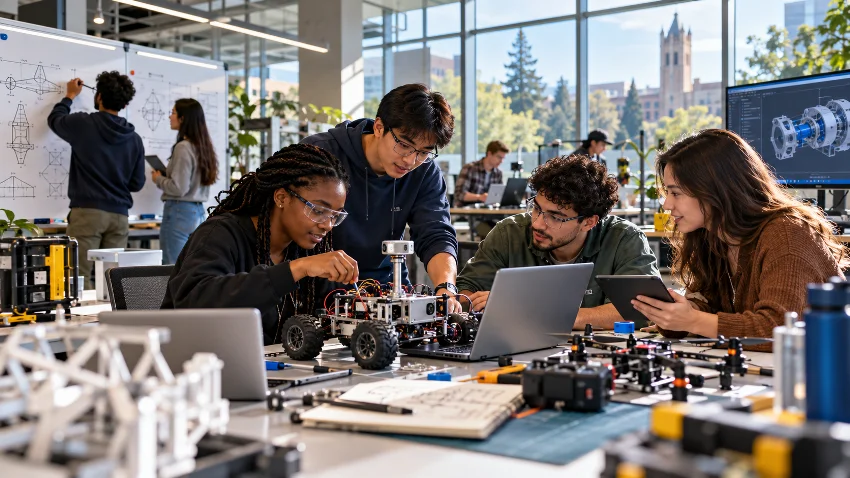
Digital platforms have changed how students access information, communicate with instructors, and organize academic responsibilities.
Learning management systems, collaborative software, digital libraries, and artificial intelligence applications can improve efficiency when used thoughtfully.
However, technology should strengthen independent understanding rather than replace it.
Creating an Effective Digital Learning Environment
A well-organized digital workspace helps students manage complex academic material.
Course documents, lecture notes, research articles, and assignment drafts should follow a consistent organizational structure.
Cloud-based tools may support collaboration and reduce the risk of losing important work, provided students maintain appropriate security and backups.
Digital calendars and task managers can also help coordinate deadlines.
The Institute of Education Sciences has published guidance on using technology to support postsecondary learning, including recommendations involving personalized resources and self-regulated learning.
The central lesson is that technology works best when connected to clear educational objectives.
Using Artificial Intelligence Responsibly
AI-powered tools may help students explore unfamiliar concepts, generate practice questions, or identify potential weaknesses in written explanations.
For example, a statistics student could request an explanation of regression assumptions using a simplified hypothetical dataset.
The student should then verify the explanation against course materials and independently complete relevant calculations.
AI-generated responses can contain errors, misleading citations, or oversimplified interpretations.
Students must also follow institutional academic-integrity policies, particularly when submitting assessed coursework.
Responsible usage means treating technology as a learning assistant rather than a substitute for original thinking.
Strengthening Digital Research Literacy
Online information is abundant, but availability doesn’t guarantee reliability.
Students should evaluate authorship, publication quality, evidence, methodology, and potential conflicts of interest.
Scholarly databases and reputable institutional publications can provide stronger foundations for academic research.
Citation management tools may simplify reference organization, although bibliographic details should still be checked carefully.
These habits improve research quality while preparing students for information-intensive professional environments.
8. Strengthening Student Engagement, Networking, and Campus Leadership
College success also depends on relationships and participation outside formal classroom instruction.
Academic communities provide opportunities for collaboration, mentorship, leadership development, and exposure to different perspectives.
These experiences can help students discover interests and career directions they might not otherwise consider.
Participating in High-Impact Educational Activities
The National Survey of Student Engagement highlights several educational experiences associated with stronger student learning and retention.
These include learning communities, service-learning, faculty-guided research, internships, study abroad, and culminating senior projects.
Such activities typically require sustained effort and meaningful interaction.
A public policy student participating in a community research initiative might collaborate with local organizations to evaluate transportation accessibility.
The experience could strengthen research skills while demonstrating how academic concepts relate to community challenges.
Students should choose activities that genuinely support their educational goals rather than joining every available program.
Building Meaningful Academic Networks
Networking doesn’t need to involve formal events or uncomfortable self-promotion.
It can begin through collaborative assignments, thoughtful conversations with faculty, and participation in academic organizations.
Strong professional relationships usually develop through consistent interaction and mutual respect.
Students can maintain connections by sharing relevant opportunities, supporting group initiatives, and communicating professionally.
Faculty mentors, alumni, classmates, and internship supervisors may eventually provide valuable career insights.
However, relationship-building should focus on genuine learning and cooperation rather than expecting immediate professional benefits.
Developing Leadership Through Campus Activities
Student leadership provides opportunities to practice responsibilities that extend beyond coursework.
Organizing events, managing budgets, coordinating volunteers, and resolving group disagreements all require practical decision-making.
Leadership positions also teach accountability.
When projects encounter difficulties, students must communicate clearly, adjust plans, and work collaboratively toward solutions.
These experiences can build confidence while producing tangible examples for future job applications.
9. Creating a Sustainable Long-Term Academic Success Plan
Strong academic performance rarely results from one dramatic change.
Instead, it emerges from a series of consistent decisions involving learning habits, resource utilization, financial management, and professional development.
Students benefit from reviewing their progress regularly rather than relying entirely on examination results.
Establishing Measurable Academic Milestones
A long-term development plan should connect current activities with future objectives.
For example, a second-year student interested in graduate research might establish milestones involving methodological training, faculty mentorship, and participation in an independent project.
A student focused on employment could prioritize technical certifications, internships, and portfolio development.
Progress can be evaluated at the end of each semester.
Useful questions include whether learning techniques are working, whether career interests have changed, and whether current activities support future plans.
This process encourages flexibility without losing direction.
Balancing Ambition With Personal Development
Academic achievement should support a meaningful future rather than become an endless competition for credentials.
Students need opportunities to explore intellectual interests, develop relationships, and maintain personal wellbeing.
Changing academic interests or adjusting professional plans doesn’t necessarily represent failure.
Sometimes new experiences reveal better opportunities.
The most succesful approach combines clear objectives with enough flexibility to respond to changing circumstances.
Continuous improvement, rather than unrealistic perfection, provides a stronger foundation for lifelong learning.
Public College excellence requires more than strong grades. It depends on effective learning systems, thoughtful financial planning, meaningful campus engagement, and practical career preparation.
By using available resources strategically and reviewing their progress regularly, students can create lasting educational value. Start improving one area of your academic routine today, then gradually build the skills, relationships, and experiences that support your future ambitions.
Looking for more information beyond what we’ve covered here? This reliable resource offers additional reading materials, useful references, and relevant perspectives to support further exploration. Visit the recommended website to discover related topics and gain a broader understanding of the subject discussed in this article.
GetMobilePrices ⭒ Routerlinksyssmartwifi ⭒ Fikretorman ⭒ TheNorthpoleBar ⭒ SingleSmokers ⭒ Stromectol1h ⭒ Eclector ⭒ KetoPremiere ⭒ Atozmp3 ⭒ Bside-rock ⭒ Ukinvestmentadvice ⭒ Buzfeed.org ⭒ MakerFieldSpring ⭒ WhiteSwillWinParty ⭒ VisitLizardCornwall ⭒ Big-HeadBasketball ⭒ VideoReview ⭒ Woodstock-Exhibition ⭒ Ispaziorepository ⭒ Accesschc ⭒ Hydrophil ⭒ SilentKnightsSoaring ⭒ RestorerMinistries ⭒ Bodybuilding-Blog ⭒ DavidsavillPhotography ⭒ BetterSingingVoice ⭒ 1kdailyprofit-official ⭒ JainSonUmbrella ⭒ Vr7uallms ⭒ Dz-Recrute ⭒ CuisineMetisse ⭒ Alphabetnyc ⭒ ProjectThinice ⭒ Lympleylodge ⭒ AmbProductions ⭒ Johnpowellavs ⭒ DakarRally ⭒ Dumbletoncc ⭒ BaconFromAcorns ⭒ LogMe ⭒ Ffmovies ⭒ Daily-News ⭒ AirTechNow ⭒ Avideo ⭒ OpenLoad ⭒ OwnerFinancing ⭒ Variable-Annuity ⭒ GoodBrand ⭒ InvestFutureNow ⭒ OceanBreeze ⭒ JustSummer ⭒ OneTech ⭒ Naturelv ⭒ DepositRetiree ⭒ CuteEye ⭒ NextVision ⭒ LordMovies ⭒ Excited ⭒ Exporelab ⭒ Supav ⭒ Astro ⭒ BeSmart ⭒ Biology ⭒ BMI ⭒ Cent ⭒ Chemistry ⭒ Cholesterol ⭒ Cooking ⭒ Daily ⭒ Dance ⭒ Dental ⭒ Diet ⭒ Doctor ⭒ Econom ⭒ Engine ⭒ Fashion ⭒ Films ⭒ ForexForum ⭒ Games ⭒ Halkali ⭒ Hazard ⭒ HealthCollege ⭒ Journal ⭒ Kidsfun ⭒ Kila ⭒ Laws ⭒ LetsTalk ⭒ Life ⭒ Lifestyle ⭒ MakeupArt ⭒ MID ⭒ MIL ⭒ Natural ⭒ Neural ⭒ NeuroSoft ⭒ Oak ⭒ Olza ⭒ Partner ⭒ PatoLogia ⭒ Philosophy ⭒ Podcast ⭒ Poker ⭒ PolisHighschool ⭒ Preceptor ⭒ Promotor ⭒ Psico ⭒ Sena ⭒ Social ⭒ WebNet ⭒ WF ⭒ Work ⭒ Nowa ⭒ Sylva ⭒ Study ⭒ Slub ⭒ NUS ⭒ UNR ⭒ UMD ⭒ UPM ⭒ Tell ⭒ Vibes ⭒ Meetup ⭒ Discover ⭒ Daily ⭒ Creative ⭒ Style ⭒ Fairy ⭒ Likeable ⭒ Mindset ⭒ Future ⭒ Genz ⭒ Truly ⭒ Dreamy ⭒ Scope ⭒ Journey ⭒ Inspire ⭒ Growth ⭒ Rogue ⭒ Mint ⭒ Looks ⭒ Hub ⭒ Sight ⭒ Focus ⭒ Digest ⭒ Flow ⭒ Explore ⭒ Ideas ⭒ Stories ⭒ Wisdom ⭒ Vision ⭒ OST ⭒ Mart ⭒ Pulse ⭒ Prime ⭒ Trend ⭒ Advice ⭒ Learn ⭒ Right ⭒ Wave ⭒ Nova ⭒ Life Space ⭒ Witrynki ⭒ RSN ⭒ IGG ⭒ Good Story ⭒ Ad Point ⭒ LVS ⭒ Go Rank ⭒ Budget ⭒ Muse ⭒ Viva ⭒ Cove ⭒ Cozy ⭒ Digi ⭒ SE ⭒ CAZ ⭒ ERZ ⭒ E-Book ⭒ Total ⭒ War ⭒ Deko ⭒ Urbans ⭒ Citi ⭒ Kicks ⭒ Rings ⭒ Edus ⭒ Seeks ⭒ More ⭒ Reads ⭒ Finds ⭒ Words ⭒ Styled ⭒ Mivo ⭒ Jelio ⭒ Zavi ⭒ Inspiro ⭒ Stylio ⭒ Trips ⭒ Trave ⭒ Move ⭒ Lane ⭒ Theory ⭒ Mosaic ⭒ Locale ⭒ Essence ⭒ Virela ⭒ Laluna ⭒ Evina ⭒ Zevora ⭒ Kultur ⭒ Pins ⭒ Tick ⭒ Netter ⭒ Pops ⭒ Cosmo ⭒ Huge ⭒ Minds ⭒ Reds ⭒ Techs ⭒ Meds ⭒ Arts ⭒ Mobi ⭒ Zelo ⭒ Lifes ⭒ Piknik ⭒ Tripy ⭒ Fins ⭒ Deeps ⭒ Dots ⭒ Teen ⭒ Gens ⭒ Revo ⭒ Tekun ⭒ Hubs ⭒ Spotiva ⭒ Startiva ⭒ Inves ⭒ Biznex ⭒ Growin ⭒ Mufa